Every year around November and December, our Weymouth office sees the same pattern — a spike in new cavities, sensitivity, and “mystery” tooth pain in both kids and adults. It isn’t random; it’s the holiday sugar effect.
Between Halloween candy, Thanksgiving desserts, and winter treats, our teeth get more sugar exposure in two months than in the rest of the year combined. The real problem isn’t how much sugar we eat — it’s how long that sugar stays on our teeth.
Let’s break down what really happens and how to protect your smile without skipping the fun.
1. Sugar itself doesn’t cause cavities — bacteria do.
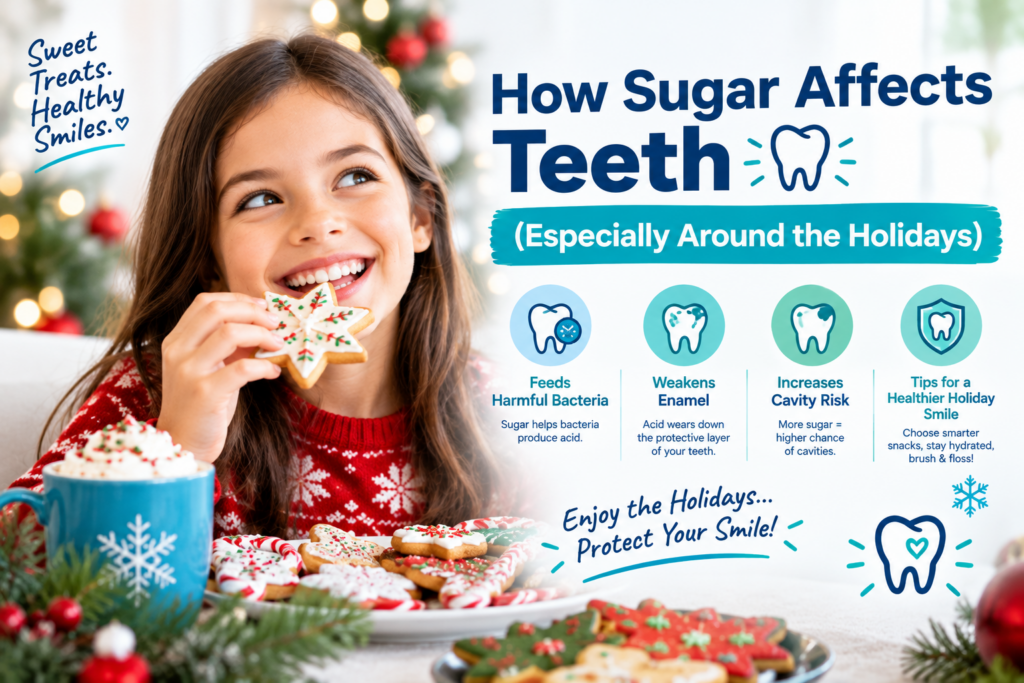
Cavity-causing bacteria (mainly Streptococcus mutans) feed on sugar and release acid as waste. That acid weakens and dissolves enamel — the hard outer layer of teeth.
Over time, repeated acid attacks lead to cavities.
Think of it this way:
Sugar is the fuel.
Bacteria are the engine.
Acid is the exhaust that damages your teeth.
2. Timing matters more than amount.
Eating one slice of pie after dinner and brushing soon after is fine. But slowly snacking on cookies or sipping cocoa for hours keeps your mouth in a constant acid-attack cycle.
Each time sugar touches your teeth, acid levels spike for about 20 minutes. Snack all afternoon, and your teeth could be under attack for hours.
That’s why dentists say it’s better to eat sweets all at once than to graze all day.
3. Sticky sweets are the worst offenders.
Caramels, fudge, gummies, dried fruit, even chewy vitamins stick deep in molar grooves. The longer sugar stays trapped, the longer acid can work on enamel.
Rinse your mouth with water after anything sticky — even before brushing.
4. Holiday drinks count too.
Hot chocolate, peppermint lattes, and cider often hide large amounts of sugar. Every sip re-coats your teeth in sweetness. If you sip for hours, you restart the acid cycle each time.
Drink water between sips or use a straw to minimize contact with your front teeth.
5. How to enjoy treats and protect your teeth
You don’t need to skip dessert — just tweak your habits:
- Drink water after every treat.
- Brush twice daily, floss nightly.
- Choose chocolate over sticky candy.
- Save sweets for mealtime (more saliva = faster acid neutralization).
- Chew xylitol gum or use mints to stimulate saliva and fight bacteria.
6. Why kids are at higher risk
Children’s enamel is thinner and less mineralized, so acid penetrates faster. Between parties, classroom treats, and leftover Halloween bags, many kids snack on candy through December — and that’s when decay sets in.
Extra focus on brushing, flossing, and fluoride toothpaste during the holidays pays off.
7. End-of-year reminder: use your dental benefits
Most insurance benefits reset January 1. If your family hasn’t used both cleanings this year, now’s your last chance before they expire.
A professional cleaning after the holidays removes plaque buildup and gives you a fresh start for the new year.
Bottom line
Sugar isn’t evil — it’s just sneaky. The more often it hits your teeth, the more chances bacteria have to make acid and weaken enamel.
Enjoy the cookies, sip the cocoa, but keep water nearby and stick to your cleaning routine.
Your teeth — and your next dental checkup — will thank you.